What is the FATF grey list, and why are countries on it?
Why countries enter the FATF grey list, how they leave, and what Monaco and Bulgaria's progress means for country risk and due diligence.
What is the FATF grey list, and why are countries on it?

Geoffrey Safar
September 23, 2026
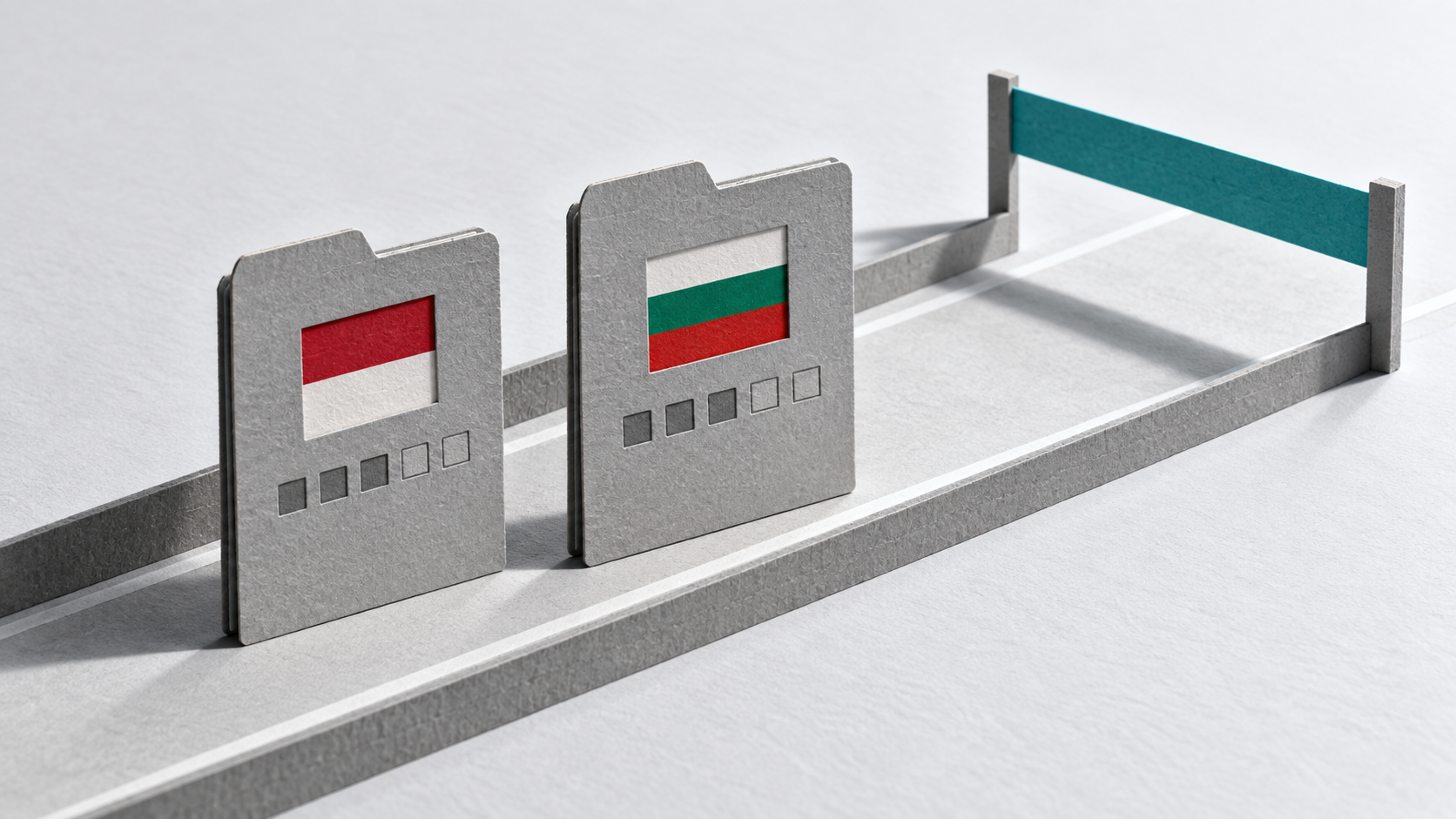
Monaco and Bulgaria could be moving towards an exit from the FATF grey list in 2027. In June 2026, the Financial Action Task Force concluded that both had substantially completed their action plans and warranted on-site assessments. Both remained under increased monitoring in that statement. A reform milestone is not a removal decision. FATF's June 2026 statement
That is the distinction behind the possible exit. Monaco's judicial authorities described a forthcoming visit after the June assessment; a Canadian regulatory advisory published in July still included both countries under increased monitoring. Neither supports treating removal as an accomplished fact. Monaco's announcement, FINTRAC's July advisory
For a compliance team, the useful question is what the country finding tells you about the relationship you are reviewing. A label can identify an issue worth examining. It cannot explain an investor's wealth, establish a beneficial owner's identity or settle which legal obligations apply to your firm.
What the FATF grey list means
The FATF grey list is the informal name for jurisdictions under increased monitoring. These countries are working with the FATF to address strategic weaknesses in their systems for combating money laundering, terrorist financing and proliferation financing. They have committed to an agreed programme of reform. FATF increased-monitoring explanation
The assessment concerns a jurisdiction's framework and its effectiveness. Its subjects include supervision, financial intelligence, investigations and the ability to recover criminal assets. That is a different level of analysis from deciding whether a particular customer has committed an offence.
A firm should therefore understand the connection it is assessing. Incorporation, residence, business operations and the origin of funds may create different questions. Treating every link to a country as interchangeable loses information that the customer file should preserve.
The FATF itself does not call for blanket enhanced due diligence on every grey-listed jurisdiction, or for firms to cut off entire categories of customers. Its statement calls for a risk-based approach. Domestic law can impose additional requirements, which must be checked separately. FATF's stated approach
Why Monaco and Bulgaria were listed
The two countries entered at different times and with different reform programmes. Their original action plans explain what the FATF wanted to see improve; they should not be presented as a list of deficiencies still unresolved today.
Monaco entered increased monitoring in June 2024. Its plan included better understanding of laundering risks linked to foreign tax offences, stronger use of international assistance to recover assets, and more effective enforcement of AML and beneficial-ownership requirements. It also addressed financial intelligence and the resources available for investigation and prosecution. Monaco's original FATF action plan
Those priorities help explain why country analysis needs more than a country's wealth or reputation as a financial centre. The assessment asks whether institutions can identify, investigate and act on the risks they face.
Bulgaria entered in October 2023. Its action plan included supervisory controls, accurate ownership information, improved handling of suspicious transaction reports and stronger investigation of laundering connected with corruption and organised crime. Other elements concerned confiscation, terrorist financing and targeted financial sanctions. Bulgaria's original FATF action plan
For an investor-onboarding team, those findings provide context for enquiries. They do not justify assuming that a Bulgarian company has opaque ownership or that a Monaco resident's wealth is suspect. The firm still needs evidence about the actual person, entity and transaction.
Why completing an action plan is not the final step
The removal process tests whether reforms have been implemented and can continue to operate. After the FATF considers the action plan substantially addressed, an on-site assessment helps verify implementation and the commitment to sustain it. The process then leads to a formal decision on monitoring status. FATF's explanation of monitoring and removal
This makes the June finding significant without making it final. A change in law, a stronger supervisory team and evidence of enforcement can support progress. The remaining assessment concerns whether the improvements work in practice.
An operational implication follows: a firm should update its record when a formal change occurs, keeping the source and effective date. It should not alter a country classification merely because an exit is anticipated. Nor should a later removal automatically erase customer-specific concerns already evidenced in a file.
That is consistent with a KYC periodic review process that considers changed circumstances. A country update is an input to the review; the reviewer still has to reach and record a conclusion about the relationship.
The grey list and the blacklist serve different purposes
The informal FATF blacklist refers to High-Risk Jurisdictions subject to a Call for Action. The June 2026 statement calls for countermeasures concerning the Democratic People's Republic of Korea and Iran, and proportionate enhanced due diligence concerning Myanmar. Even within that category, the requested response is not identical. FATF's June 2026 Call for Action
Neither FATF list is a list of individually sanctioned people. Country-risk assessment and sanctions screening answer different questions. A name-screening result cannot substitute for reviewing the jurisdictional risks of a relationship, just as a country label cannot establish a sanctions match.
FATF status and local law are separate checks
The EU maintains its own list of high-risk third countries. Monaco appears on it, with the relevant addition applying from 5 August 2025. Bulgaria is an EU Member State, so its absence from a third-country list does not contradict its FATF monitoring status. The Commission explains the additional due-diligence measures associated with its list. European Commission country-list guidance
The UK position also needs a date. HMRC records that, from 30 June 2026, the relevant definition in regulation 33 changed from high-risk third countries to FATF Call for Action countries. The automatic country-based trigger therefore should not be described using the older rule that covered both FATF lists. That change does not remove the need for enhanced diligence where other high-risk circumstances require it. HMRC's amendment history, HMRC's current guidance
For firms operating across jurisdictions, one global country label may therefore feed different legal decisions. Record the applicable rule alongside the source of the risk information.
Bring the country finding back to the investor file
Take an illustrative investor whose holding company has a connection to Monaco. The analyst needs to understand what that connection is, who controls the company, and how the proposed subscription was funded. A current structure chart and supporting records may answer some questions. An unexplained intermediary or inconsistency in the account may create others.
The distinction between verifying a company and verifying an individual matters here. Following the ownership structure establishes whose circumstances need assessment. The country statement then contributes context rather than standing in for that work.
Steward brings investor evidence, screening and risk assessment into the onboarding workflow, with human oversight of decisions. The practical aim is a record in which the source, additional enquiries and review conclusion can be understood together.
When the next FATF announcement arrives, the useful output is a reasoned update to affected files. It should explain what changed, which rule applies and why the firm's response is proportionate.
Related Insights

Toys, collectibles and money laundering: following the funds
How toys and collectibles intersect with money laundering, and why an auction receipt alone may not explain an investor's source of funds

How on-chain AML analysis differs from conventional checks
Understand how on-chain AML analysis traces crypto transactions, where attribution can fail, and why identity and source-of-funds checks still matter.

Plug Capital brings Steward in to be its chosen partner for AML/KYC across its VC fund umbrella
Plug Capital partners with Steward for AML/KYC compliance across its VC fund umbrella, streamlining investor onboarding for emerging managers.